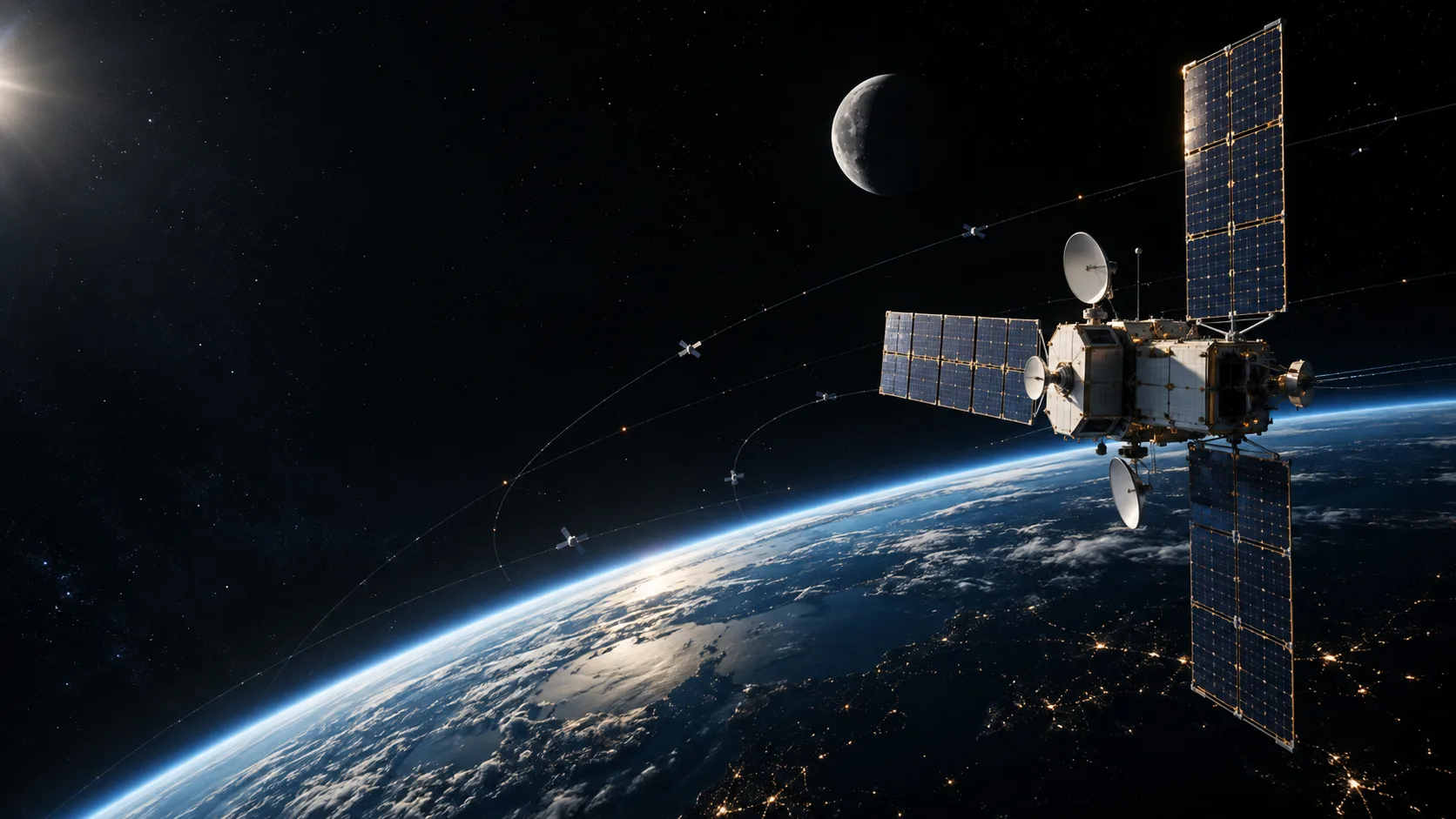
“Satellite internet” once implied a dish, a geostationary satellite and a household beyond cable coverage. That category has split. Low-Earth-orbit broadband, multi-orbit enterprise networks, maritime terminals, aviation connectivity, narrowband internet-of-things links and direct-to-device mobile coverage now have distinct economics.
Start with the job
A remote home needs sustained downstream capacity, reasonable latency and stable installation. A ship needs coverage along actual routes, service-level support and equipment that tolerates motion and salt. A utility sensor values tiny power consumption and years of availability over video speed. A phone user primarily wants a safety net when towers vanish.
These jobs can share spacecraft but should not share a buying scorecard. Measure usable capacity at the location, terminal power and view of sky, installation, mobility rights, data policy, network support, resilience and total contract cost. Advertised peak speed is one input, not the answer.
Constellations meet distribution
Amazon says its Leo network will use more than 3,000 satellites and three terminal classes — Nano, Pro and Ultra — connected by optical links and ground infrastructure. In June 2026 it reported more than 330 satellites after twelve missions and a multi-provider launch plan. These are operator disclosures; service quality must be verified when commercial coverage reaches each market.
Starlink’s direct-to-cell material illustrates the other branch: the customer device may be a standard phone, while a mobile operator supplies market access. The network disappears behind an existing plan. In enterprise service, by contrast, the integrator and ground network may be as important as the constellation.
There is no best satellite network in the abstract. There is a best-fit architecture for a route, workload, risk tolerance and jurisdiction.
A disciplined shortlist
First eliminate systems that are not authorised or commercially available at the operating location. Then separate fixed, portable and in-motion rights. Test obstruction and weather at the actual site. Ask how traffic is routed and where support resides. Finally, price the full deployment — terminal, mounts, power, installation, contract, data and redundancy.
Prices change quickly by country, promotion and equipment class, so this publication does not freeze a global price table that ages into misinformation. Our product tracker records dated official offers and displays the market and tax assumptions beside every number.
Sources
- Amazon, Amazon Leo overview, accessed September 2026.
- Amazon, “Amazon Leo’s largest Arianespace launch yet,” June 5, 2026.
- Starlink, Direct to Cell service overview.
- FCC, SCS Order DA 26-380, April 22, 2026.